Column · @judahjsza815
Can Fotona 4D Laser Facial (TimeWalker) Replace More Invasive Procedures in Encino, CA?
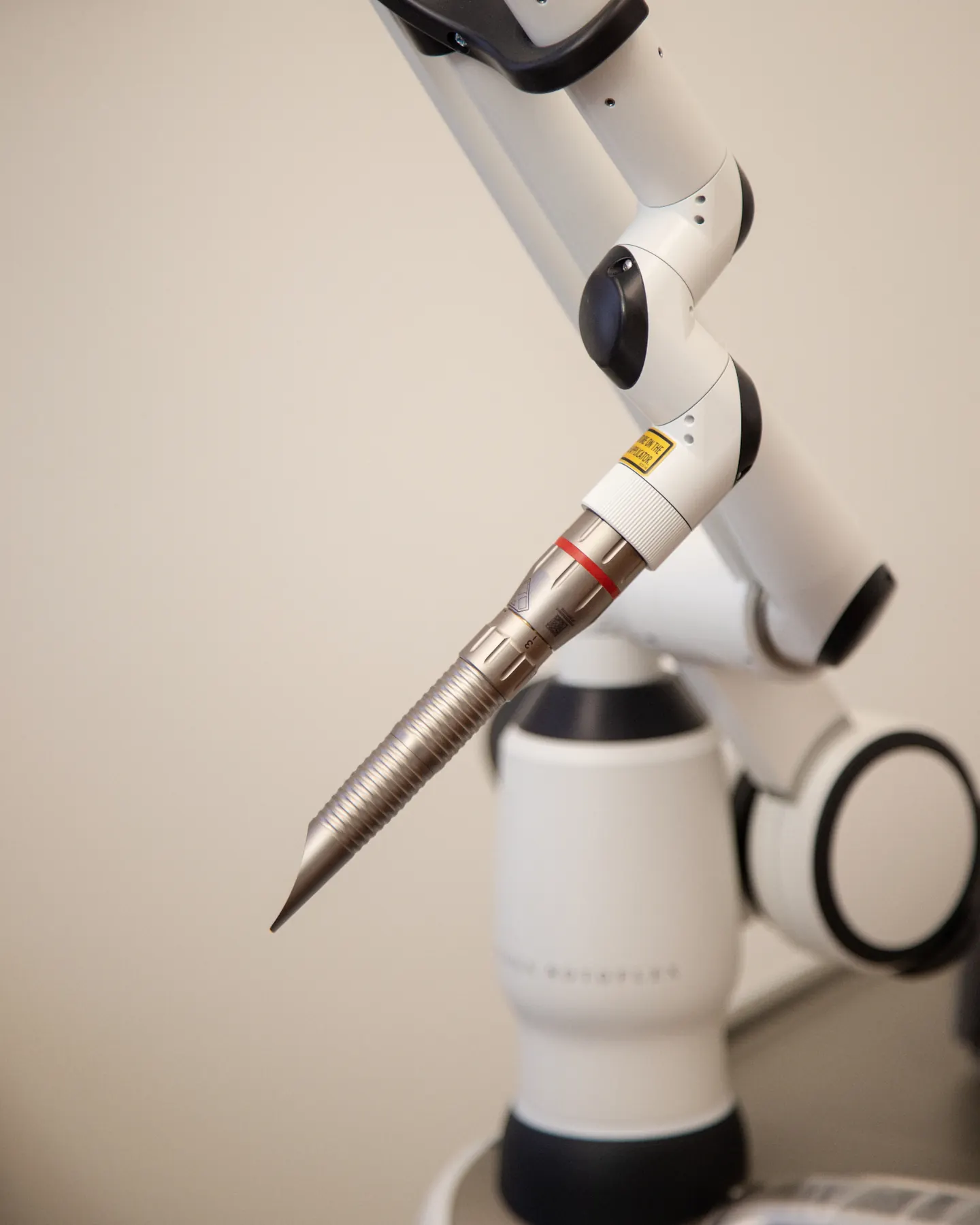
The short answer is, sometimes, but not in the way many patients hope when they first hear the word “laser.”
I have seen this pattern over and over in cosmetic consultations. Someone in Encino walks in after reading about nonsurgical tightening, skin resurfacing, or collagen stimulation and asks a version of the same question: can this replace a facelift, deep resurfacing, or injectables? What they usually mean is simpler. They want less downtime, less risk, fewer obvious signs of treatment, and a result that still looks meaningful in bright California daylight.
That is exactly where a treatment like the Fotona 4D Laser Facial (TimeWalker) becomes interesting. It occupies a very specific middle ground. It is more substantial than a basic facial or light lunchtime treatment, but it is still not surgery. It can improve skin texture, mild laxity, early jowling, perioral lines, and overall tone. It can also be a smart option for patients who are not ready for more invasive procedures or who want to maintain the results of prior work. But “replace” is a strong word, and in aesthetics, strong words often cause disappointment.
For many people considering Fotona 4D Laser Facial (TimeWalker) Encino, CA, the better question is not whether it replaces invasive procedures across the board. The better question is this: for which concerns can it reasonably stand in, and where does it clearly fall short?
What the treatment is actually trying to do
Fotona 4D is best understood as a layered skin rejuvenation approach rather than a single one-note laser pass. Different settings and handpieces are used to target different tissue depths and treatment goals. Depending on the protocol, it may address the inside of the mouth for tightening around the perioral area, the superficial skin for texture and brightness, and deeper dermal layers for collagen remodeling.
That layered strategy matters. Aging does not happen on one plane. Fine lines, crepey texture, enlarged pores, pigment variation, and tissue descent each live at different depths. A treatment that can work at more than one level often creates a more polished result than a single superficial peel or a basic radiofrequency session.
Still, collagen remodeling has limits. It can tighten mild laxity. It cannot reposition descended fat pads the way surgery can. It can soften etched lines. It cannot erase very deep folds with the precision of a well-placed filler. It can improve the look of the lower face. It cannot create the sharp structural reset of a facelift in someone with significant skin redundancy.
That distinction is where good outcomes begin. When expectations are grounded, patients are often very happy with what this technology can do.
Why Encino patients often ask this question
Encino has a patient population that tends to be visually discerning and socially active. People here often want to look refreshed without looking “done.” They may be on camera, in client-facing work, or simply accustomed to seeing themselves in unforgiving natural light. They also tend to have a practical concern about downtime. A week or two of visible recovery may be too much, even if they are interested in a meaningful result.
Southern California sun exposure complicates the picture. Years of incidental UV damage often show up as mottled pigment, rough texture, broken capillaries, and collagen loss at the same time. That means many patients are not just seeking lift. They want smoother skin, tighter pores, less crepiness, and a fresher overall quality. Surgery alone does not solve all of that. A facelift may tighten and reposition tissue beautifully, but it does not magically resurface weathered skin. In some cases, a laser-based treatment becomes the more relevant first step because the complaint is not truly “my face is falling,” it is “my skin looks tired.”
This is why a Fotona 4D Laser Facial (TimeWalker) Encino, CA consultation often ends up being more nuanced than expected. The treatment may not replace surgery, but it may address the patient’s main concern more directly than surgery would.
Where Fotona 4D performs surprisingly well
The best candidates are usually those in the early to moderate phase of facial aging. They are starting to see laxity, but not severe sagging. They have lines around the mouth, a loss of glow, some textural irregularity, and maybe that subtle heaviness that makes the lower face look less crisp than it did five years ago.
In this group, Fotona 4D can do several things at once. It can improve surface quality, nudge collagen production, and create a mild tightening effect. Patients often describe the end result not as dramatically younger, but as rested, smoother, and healthier. That phrasing matters, because it reflects what the treatment does best. It refines.
One area where this kind of treatment can be particularly helpful is around the mouth. The perioral region ages early and often gives away the face even when the cheeks and jawline are still holding up. Lip lines, smoker’s lines in nonsmokers, soft creasing, and a slight collapse in the support around the lips can make someone look more tired than they feel. The intraoral component of Fotona 4D is designed to target that area from the inside, which is a distinctive advantage. It does not replicate a surgical lip lift or filler, but it can noticeably improve the quality of the tissue around the lips.
Texture is another strong point. A patient may not need a facelift at all if what is really bothering them is enlarged pores, roughness, and a dull finish that makes the skin look older. In practice, this is common. People often mislabel a skin quality problem as a lifting problem. Once the skin is smoother and more reflective, they look younger even if the anatomy has not dramatically changed.
Where it does not replace invasive procedures
The line becomes clearer when facial aging is more advanced. If someone has prominent jowls, significant neck laxity, heavy lower-face descent, or deep nasolabial and marionette folds caused by structural volume loss and tissue movement, laser alone is not a true substitute.
This is not a criticism of the technology. It is simply the physics of aging. A laser can heat and remodel tissue. It cannot remove excess skin. It cannot reposition sagging deeper structures in the way a lower facelift can. It cannot rebuild volume in hollow temples or cheeks the way filler or fat transfer can. It cannot relax dynamic crow’s feet or glabellar lines the way neuromodulators can.
That is where many online before-and-after expectations get people into trouble. They see broad claims about “tightening” and imagine a surgical result. Tightening is a spectrum. Mild to moderate tightening in the right patient can be excellent. Mild tightening in the wrong patient feels like a waste of time and money.
One of the most useful things a clinician can say is, “This will help, but it will not replace the procedure you are really asking about.” Patients usually appreciate the honesty. In my experience, disappointment comes less from underwhelming technology than from loose language used during the decision process.
Comparing it to a facelift, fillers, and aggressive resurfacing
A facelift and Fotona 4D are not direct competitors. A facelift targets position and excess tissue. Fotona 4D targets skin quality and modest tightening. Some overlap exists in the lower face, but the scale is different.
Fillers are also not direct substitutes, although patients often frame them that way. Filler restores or mimics volume. Laser improves skin and stimulates collagen. If a patient looks gaunt or structurally flattened, laser will not restore that architecture. On the other hand, if the face is becoming overfilled from years of trying to fix textural aging with syringes, a laser-based treatment may be the more elegant answer.
Aggressive resurfacing is a closer comparison. Deeper ablative procedures can produce dramatic changes in lines and texture, but they also bring more downtime, stricter aftercare, and greater risk of prolonged redness or pigment issues, especially in certain skin tones or in patients with a lot of sun exposure. Fotona 4D generally appeals to patients who want visible change without signing up for a longer recovery window. They may accept a more gradual result in exchange for that balance.
The real trade-off, result intensity versus recovery
If there is one rule that holds up in aesthetic medicine, it is this: stronger procedures usually deliver stronger results, but they ask more of the patient. More downtime. More post-treatment care. More social visibility during healing. Sometimes more discomfort. Sometimes more risk.
Fotona 4D sits in the category of treatments designed to create worthwhile improvement while keeping recovery manageable. That has real value in a place like Encino, where many patients want to return to work, social events, school pickup, or on-camera commitments quickly.
Recovery varies by protocol and skin sensitivity, but many patients experience temporary redness, warmth, dryness, or a sandpapery feel for a few days. Some have mild swelling. Makeup timing depends on the exact settings used and the skin’s response. It is usually far easier than a surgical recovery or deep ablative laser healing, but that does not mean zero downtime. “No downtime” is one of those phrases that sounds good in marketing and rarely matches real life.
A patient once described her experience in a way I think is accurate. She said it was not a disappearing act, but it was a strong enough refresh that people asked whether she had changed her skincare, started sleeping more, or come back from vacation. That is often the sweet spot.
Who tends to be happiest with this treatment
The happiest patients usually share a few characteristics. They want improvement, not transformation. They are patient enough to let collagen remodeling unfold. They understand that a series may be recommended rather than a single treatment. And they are willing to support the result with good skincare and sun protection.
Here are the profiles that most often do well:
- Patients with early jowling or mild lower-face laxity
- People bothered by rough texture, enlarged pores, or dullness
- Those with fine lines around the mouth and cheeks
- Patients not ready for surgery, or not interested in surgery
- Individuals maintaining results after previous cosmetic procedures
There is another group worth mentioning, patients who have become hesitant after seeing overdone filler. They want rejuvenation, but they do not want facial heaviness or distortion. For them, collagen stimulation and resurfacing can feel more aligned with their goals because the face still looks like their face.
When another route makes more sense
If a person has substantial skin redundancy under the chin, banding in the neck, heavy jowls, or marked midface descent, a consultation should be frank. Laser may be part of the plan, but it is probably not the anchor treatment. In that scenario, surgery may provide the result the patient is actually seeking, while laser can later refine the skin itself.
The same goes for very deep static lines. Laser can soften them, sometimes impressively, but if the line is carved in at rest from repetitive muscle movement or volume collapse, combination treatment often works better. Neuromodulators, filler, biostimulatory injectables, surgery, or a different resurfacing intensity may be more appropriate depending on the face.
This is why one-size-fits-all recommendations rarely age well. A 42-year-old with early textural decline and mild laxity is a different case than a 63-year-old with advanced lower-face descent and significant sun damage. Both may benefit from Fotona 4D, but only one might plausibly treat it as a primary alternative to something more invasive.
The role of skin tone, sun habits, and lifestyle
Any honest conversation in Southern California has to include sun behavior. A patient can invest in collagen stimulation and resurfacing, then undermine the result with daily incidental UV exposure. Driving, walking the dog, eating lunch outside, and running errands without diligent sunscreen add up. Encino patients often know this in theory, but they underestimate how much routine exposure affects redness, pigment, and collagen breakdown.
Skin tone also matters in laser planning. Not every energy-based treatment is equally forgiving across all skin types, and settings often need to be tailored carefully. That is not a reason to avoid treatment. It is a reason to work with an experienced provider who understands how to balance efficacy and safety rather than chasing a dramatic setting on day one.
Lifestyle affects expectations too. Smokers, patients with chronic dehydration, those using irritating skincare before treatment, and people with inconsistent aftercare habits tend to Fotona 4D Laser Facial (TimeWalker) Encino, CA have a rougher road. The best devices in the world cannot completely outrun poor healing habits.
What to ask during a consultation in Encino
A good consultation should feel less like a sales pitch and more like a diagnosis. The provider should identify whether your main issue is laxity, texture, pigment, volume loss, dynamic lines, or some mix of all five. That breakdown determines whether Fotona 4D is likely to satisfy you.
A few questions are especially useful:
- Which of my concerns will this treatment improve most, and which will it not address well?
- Am I a better candidate for this as a stand-alone treatment or as part of a combination plan?
- How many sessions are usually realistic for someone with my degree of aging?
- What will my downtime probably look like based on the settings you plan to use?
- If I wanted a stronger result, what procedure would you compare this to honestly?
That last question often reveals the quality of the consultation. An experienced clinician can say, plainly, whether your goals line up with a laser facial, a surgical option, injectables, or a staged combination.
Why combination planning often beats the replacement mindset
The word “replace” can actually limit good decision-making. In aesthetics, the best outcomes often come from choosing the right tool for each layer of the problem rather than forcing one treatment to do everything.
For example, someone in Encino with mild jowls, etched lip lines, uneven texture, and a little cheek deflation might do beautifully with Fotona 4D plus a conservative amount of filler, or with Fotona 4D plus neuromodulator, rather than escalating to surgery or trying to make filler solve every complaint. Another patient with more advanced sagging might choose a lower facelift for structure and then use laser for the skin finish. In both cases, the question is not replacement. It is sequencing.
That way of thinking tends to produce more natural results. It also usually creates a better long-term maintenance strategy. Skin quality can be maintained. Collagen can be supported. Surgery can be delayed in some patients, and when it is eventually chosen, the tissue quality may be better.
So, can it replace more invasive procedures?
For the right Encino patient, yes, but only within a narrower lane than marketing language suggests.
It can absolutely delay or reduce the need for more invasive treatment in someone with early aging changes, especially when the dominant issue is skin quality with a side of mild laxity. It can be a meaningful alternative for patients who want visible rejuvenation without surgery or prolonged downtime. It can also outperform a more invasive option when the patient’s real complaint is rough, tired-looking skin rather than tissue descent.
But if the issue is significant sagging, excess skin, deeper structural aging, or a desire for dramatic correction, Fotona 4D is not a true replacement. It is either a complementary treatment or a stepping stone.
That is not a disappointing answer. It is the useful one. The best cosmetic plans are not built on broad promises. They are built on matching the treatment to the anatomy, the degree of aging, the recovery tolerance, and the patient’s idea of success.
For patients exploring Fotona 4D Laser Facial (TimeWalker) Encino, CA, that level of honesty is what separates a treatment that feels worthwhile from one that feels oversold. When used for the right face, for the right reasons, it can be an excellent choice. When used as a stand-in for surgery in someone who clearly needs lifting or repositioning, it usually is not.
That is the real answer, and in aesthetic medicine, real answers tend to age the best.
OMNIA Wellness Center
16430 Ventura Blvd Ste 207, Encino, CA 91436
Phone: +1 818-386-8511
FAQ About Fotona 4D Laser Facial (TimeWalker) Encino, CA
What is a Fotona laser good for?
Fotona lasers support several different aesthetic protocols. The Fotona 4D facial uses two wavelengths and four treatment modes to address concerns such as fine lines, skin texture, and mild laxity. OMNIA Wellness Center offers the TimeWalker facial with an individual consultation. Suitability and likely improvement depend on the person's skin and goals; results are not guaranteed, and this treatment does not reproduce a surgical facelift.
How much does a Fotona laser treatment cost?
The cost depends on the treatment protocol, areas treated, number of sessions, and provider's assessment. Ask OMNIA Wellness Center for a current written quote that explains what is included, whether follow-up is included, and any proposed package terms. An individualized estimate is more useful than assuming that one advertised price applies to every facial treatment.
How much downtime is there after a Fotona laser procedure?
Recovery varies with the specific protocol and intensity. Fotona describes its 4D facial as having little to no downtime, but temporary redness or sensitivity can occur, and a stronger surface treatment can require more recovery. Ask the treating clinician what to expect from the planned settings, how to care for the skin afterward, and when to contact the clinic with concerns.